Review how personal data, tracking scripts, cookies, and third-party technologies appear to behave on your website during real user visits. Auditzo’s website privacy audit helps teams understand potential privacy compliance risks through structured technical observations.
Looking specifically for cookie behavior? Use the GDPR cookie checker.
A website privacy audit is useful for organizations that want a clearer view of how personal data may be collected or transmitted during real website visits. It helps teams understand whether tracking technologies, scripts, and external services appear to operate consistently with privacy disclosures and consent expectations.
A website privacy audit reviews how data-related technologies behave during normal visits. This includes cookies, tracking scripts, analytics tools, advertising pixels, and other third-party services that may collect identifiers such as IP addresses, device information, or session data.
This page explains website privacy audit workflow in general informational terms.
Website privacy audits often reveal behaviors that are not obvious from visual inspection alone. Cookies, analytics scripts, or external tracking technologies may activate during page loads or user interactions even when consent controls appear present.
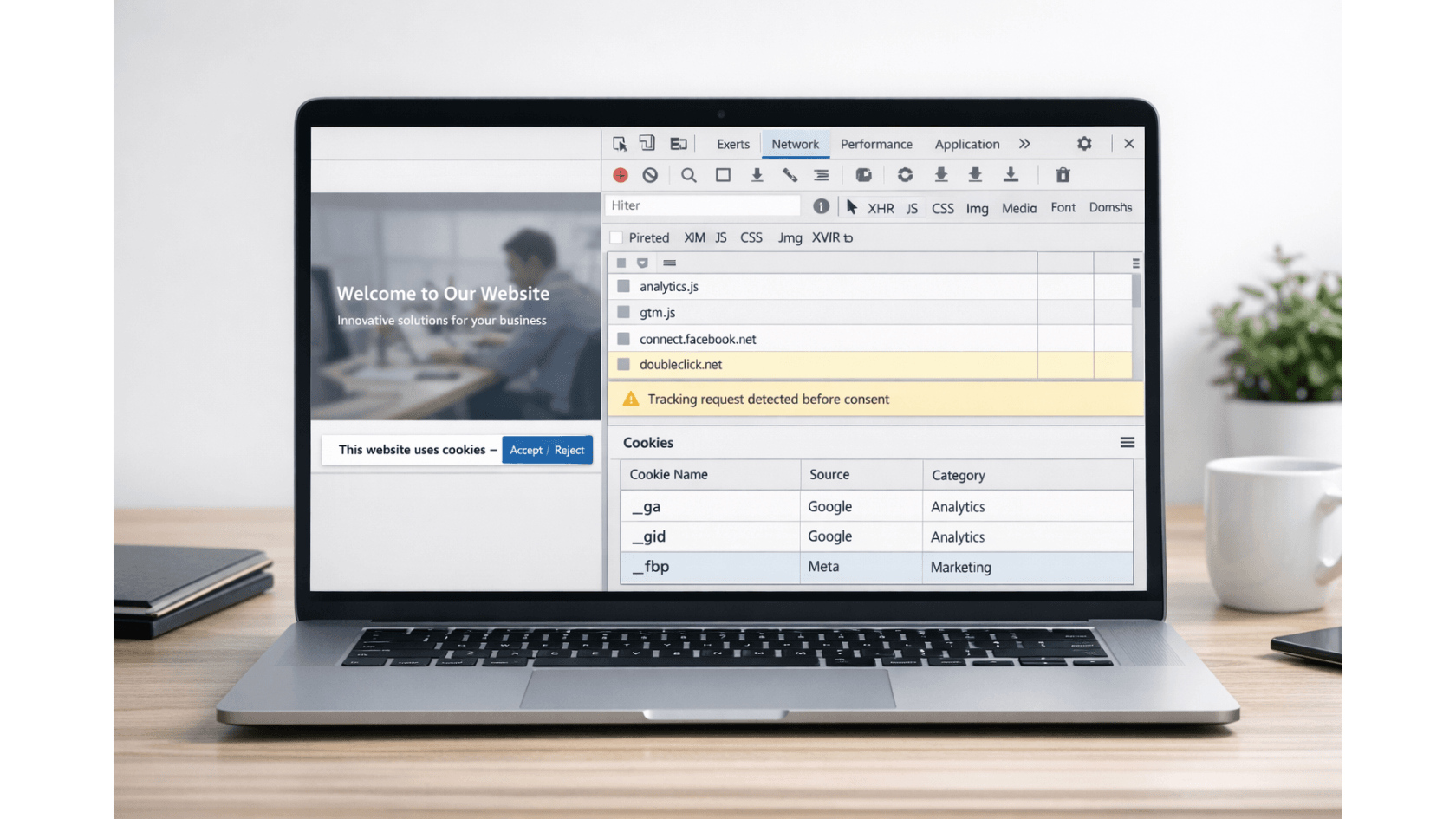
Example view of tracking scripts, cookies, and third-party requests detected during website review.
Analytics or advertising scripts may activate during initial page visits.
External services may receive identifiers such as IP addresses or device metadata.
Website privacy policies may not reflect actual tracking activity.
Tracking behavior may not clearly align with user consent actions.
Privacy audits are often most useful when combined with other compliance checks. You can review cookie behavior using the GDPR cookie checker, perform broader website scans with the website compliance checker, or review requirements using the GDPR audit checklist.
Focus specifically on cookies, trackers, and consent behavior.
Use cookie checker →Review broader compliance signals beyond cookies.
Check website compliance →Run a broader compliance scan to understand how cookies, tracking technologies, and third-party services may affect your website’s privacy posture.
Start a privacy audit and receive a structured report by email describing cookies, scripts, third-party requests, and privacy-related observations detected during website visits.