GDPR Audit Tool

Use Auditzo’s GDPR audit tool to review how your website handles cookies, consent behavior, tracking scripts, forms, privacy disclosures, and third-party technologies during real website visits.

  • Review live website behavior across cookies, scripts, and forms
  • Identify practical GDPR website compliance risk areas
  • Receive a structured audit report with clear observations

Not sure whether GDPR is the right framework for your website? Use the compliance framework finder.

Website Audit Form

Not sure which law applies? Find out which compliance laws apply to your website

Want to understand the process first? See how Auditzo audits websites

Auditzo reviews publicly accessible website behavior only. No changes are made to your website during the audit.

What is a GDPR audit tool?

A GDPR audit tool helps teams review how a website appears to collect, process, and share user-related data during real visits. For websites, this often includes cookies, consent mechanisms, analytics tools, advertising pixels, forms, privacy disclosures, and third-party technologies that may receive identifiers or related request data.

In practice, a useful GDPR audit tool supports more than surface checks. It helps teams understand actual website behavior, compare it against intended controls, and organize findings in a more structured way.

Who this GDPR audit tool is for

This GDPR audit tool is designed for organizations that want a practical way to review website tracking, consent behavior, forms, disclosures, and third-party technologies during live website visits.

  • SaaS and software companies
  • E-commerce and lead-generation websites
  • Marketing teams using analytics and ad platforms
  • Agencies reviewing client websites
  • Privacy and compliance teams
  • Founders preparing for audits or expansion

What the GDPR audit tool reviews

A practical GDPR audit reviews more than whether legal text exists on the website. It examines how cookies, scripts, consent controls, forms, and third-party technologies behave during real user visits, and whether those behaviors appear consistent with the website’s intended compliance posture.

Core audit review areas

  • Cookie and consent behavior
  • Tracking scripts and third-party technologies
  • Forms and data collection points
  • Privacy and cookie disclosure consistency

What the audit compares

  • Pre-consent vs post-consent behavior
  • Tracker behavior across different page types
  • Third-party request visibility
  • Observed behavior vs written disclosures

This page is informational and intended to explain GDPR website audit workflow and practical review scope in general terms.

Common issues a GDPR audit tool can help surface

Many websites appear compliant at a visual level but still show technical behavior that deserves closer review. A structured audit helps surface issues that may not be obvious from policies or banners alone.

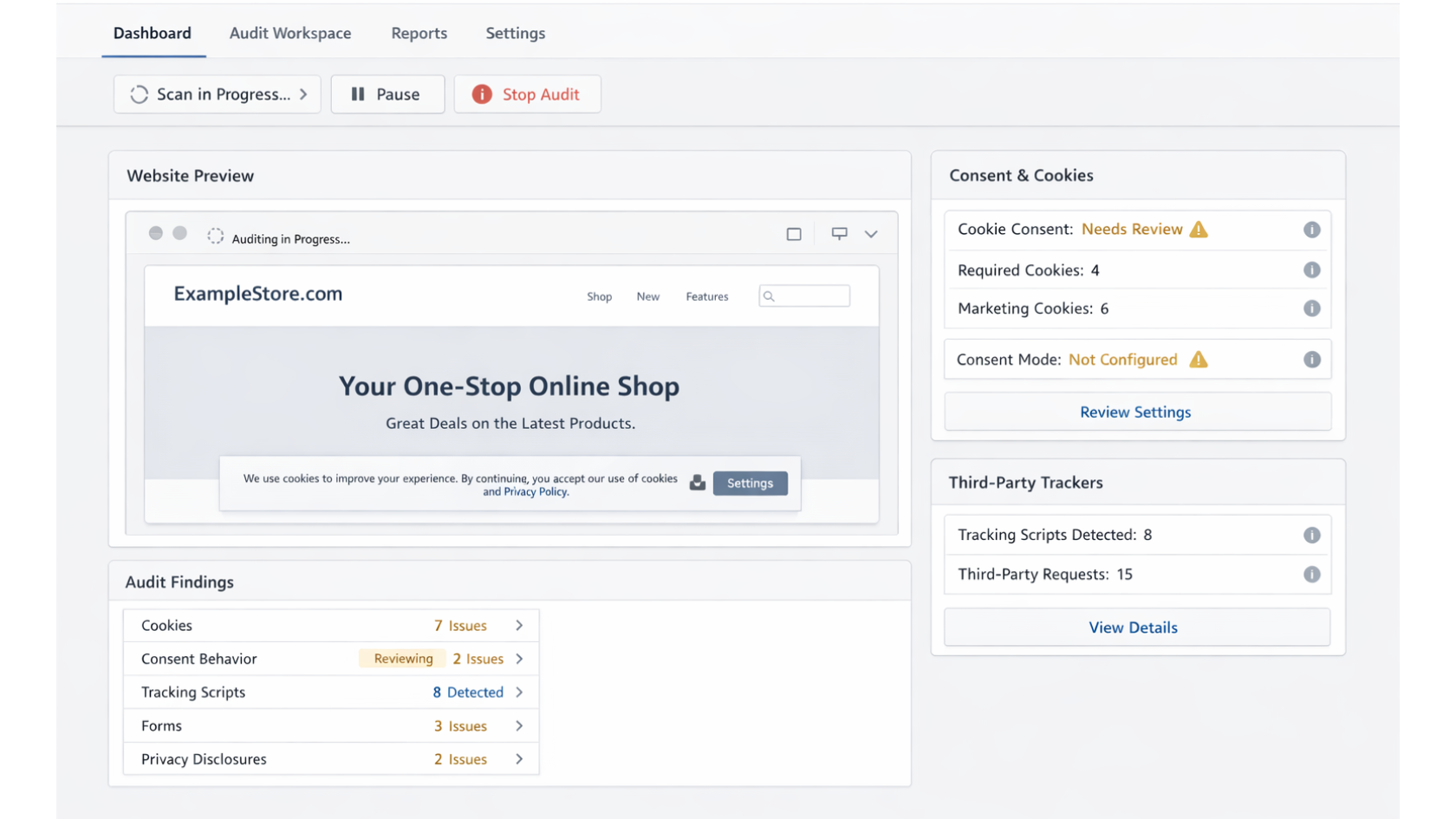
GDPR audit tool preview showing cookies, trackers, consent-related findings, and third-party technology review

Example view of audit findings involving cookies, trackers, consent-related behavior, forms, and third-party technologies.

Cookies or trackers loading before consent

Non-essential technologies may activate before a user has made a meaningful choice.

Third-party requests not obvious from disclosures

External services may receive identifiers or request data during page visits without clear visibility in policy text.

Consent interfaces not matching live behavior

A visible banner does not always mean scripts are blocked or controlled as intended.

Forms and collection points needing closer review

Signup, contact, or checkout workflows may create collection and disclosure mismatches during website use.

How Auditzo performs the GDPR audit

Auditzo reviews live website behavior during real visits and documents how cookies, scripts, forms, trackers, and third-party technologies appear to operate. This helps teams understand practical GDPR website exposure using structured observations.

Behavior-based review

Focuses on what the website appears to do during real visits across cookies, scripts, forms, and third-party technologies.

Consent-state comparison

Helps teams understand how tracking behavior appears to change before and after user choice.

Third-party visibility

Reviews how analytics, advertising, embeds, and other external services appear during website use.

Structured reporting

Findings are organized clearly to support internal review, communication, and remediation planning.

What you receive after an audit

Structured audit report

Clear sections summarizing website observations and compliance-related findings.

Consent and tracking findings

Organized observations around cookies, scripts, and related behavior.

Third-party activity visibility

Helpful for understanding external tools and services appearing during page visits.

Plain-English explanations

Designed to be understandable for both technical and non-technical internal stakeholders.

Reports are designed to support internal GDPR website review, follow-up, and remediation planning.

A GDPR audit is often most useful when combined with supporting resources that help teams understand findings, narrow review scope, or identify the right compliance path from the start.

GDPR audit checklist

Use a structured manual checklist before or alongside live website review.

View audit checklist →
GDPR cookie checker

Focus specifically on cookie and tracker-related website behavior.

Use GDPR cookie checker →
Sample report

See how structured findings and audit observations are presented.

View sample report →
Framework finder

Not sure whether GDPR is the right starting point? Check which frameworks may apply.

Use framework finder →

Frequently asked questions

What is a GDPR audit tool?

A GDPR audit tool helps review cookies, consent behavior, tracking scripts, forms, third-party technologies, and disclosure consistency during live website use.

What does a GDPR audit tool check?

It typically checks cookies, trackers, consent-related flows, forms, third-party requests, and whether website behavior appears consistent with disclosures.

Why is a visible banner not enough?

A visible banner does not always mean trackers are blocked correctly. Actual website behavior may differ from what the banner suggests.

Can this help with GDPR website compliance review?

Yes. Structured website audits are often useful for reviewing practical GDPR risk areas involving tracking, consent, forms, and third-party technologies.

Not sure whether GDPR is the only framework that may apply to your website?

Use Auditzo’s framework finder to understand whether GDPR, CCPA, CIPA, or other compliance frameworks may be relevant based on your website and user base.

Run a live GDPR website audit

Start a GDPR audit and receive a clear report with practical observations about cookies, scripts, consent behavior, forms, and related tracking activity.